

Zero-day vulnerabilities are software or hardware flaws that the vendor or developer doesn’t know about. They are dangerous because security teams have had “zero days’" to patch them.
Security teams can use zero trust principles such as runtime visibility, segmentation, consistent policy enforcement, encryption, and identity-aware controls to proactively protect their networks from zero-day vulnerabilities.
What is a Zero-Day Vulnerability?
A zero-day vulnerability is a very specific class of cloud security risk. It is a flaw in a piece of software or hardware that the vendor or developer is unaware of and therefore has no fix or patch available for it.
This makes zero-day vulnerabilities more dangerous than other cloud security risks:
Attackers can exploit flaws for which there is no immediate defense—and no one is even looking in that direction for potential incidents.
By the time the vulnerability is discovered and the unknown unknown becomes a known unknown, exploitation is already underway and the vendor has “zero days” to fix it, hence the name.
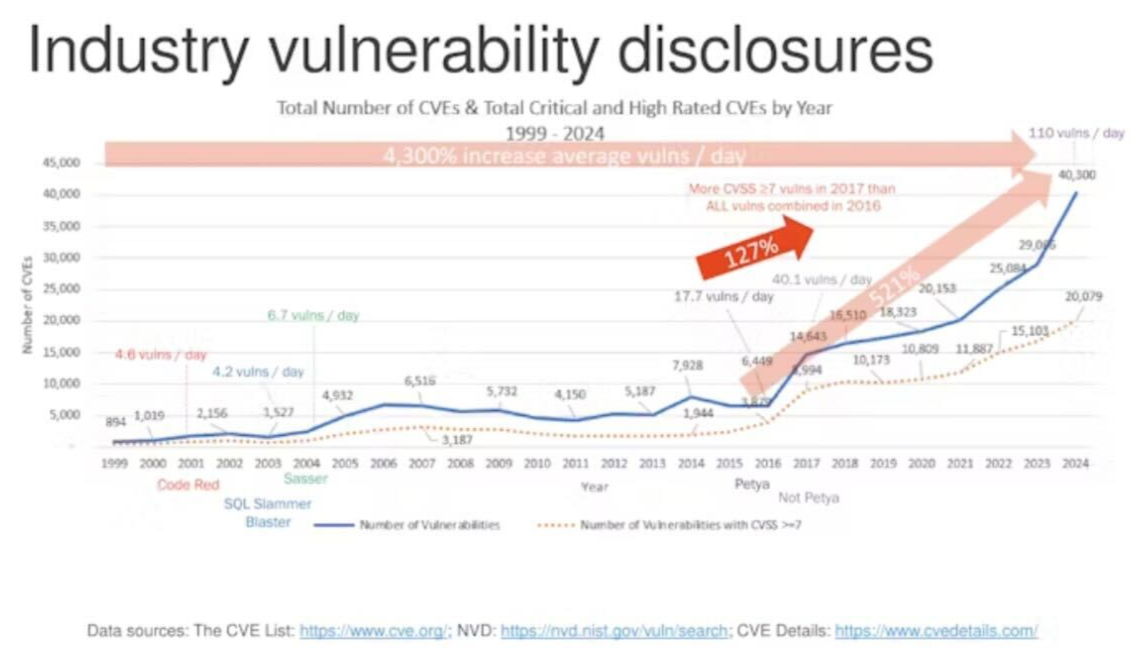
In 2024, Google reported seeing 75 zero-day vulnerabilities that had been exploited throughout the year. Of those, 44% were in enterprise products. And up to 20—about one-quarter of all zero-day flaws and 60% of enterprise product weaknesses—were in security and networking software and appliances, showing that even cloud security experts aren’t immune.
Why Is Zero-Day Such A Difficult Problem To Solve?
If the vendor isn’t aware of vulnerabilities, how can malicious actors find them?
Threat actors use a variety of analysis techniques such as manual reverse-engineering and automated “fuzzing” to enumerate and exploit. They can also leverage compromised third-party software dependency supply chains and misconfigurations in cloud environments, network infrastructure, or hardware devices.
Why don’t system owners use those same techniques to find and fix the flaws first?
It ultimately comes down to asymmetry: of effort, impact, payoff, and other factors.
For example:
Asymmetry of: | Attacker perspective | System owner perspective |
Scope | Only needs to find one exploitable flaw, so they can concentrate their efforts on specific, high-value targets, and the potential payoff of can justify the time and effort. | Must secure everything. Fixing one bug isn’t enough; they need to find and fix potentially thousands throughout every line of code, dependency, configuration, and integration. |
Risk tolerance | Doesn’t care that many zero-day discovery techniques are inherently dangerous and can cause collateral damage. | Cannot afford to use methods that potentially break things, corrupt data, or take systems offline. |
Timeline | Can begin exploiting a discovered vulnerability immediately. | Must stick to a process (e.g., discovery, validation, root cause analysis, patch development, QA and regression testing, customer rollout) that no matter how quickly it's executed, will always be slower. |
Incentives | Success is measurable and rewarded financially, reputationally, or ideologically. | Security work is often a cost center, and the success metric (i.e., nothing happened) is hard to quantify for resource and budget purposes. |
But asymmetry isn’t the only challenge. Characteristics of modern computing including multicloud complexity, distributed apps, and high velocity release cycles further complicate the problem. They expand the attack surface, shrink the incident response window, and break the assumptions traditional security relies on.
Multicloud complexity: Zero-days thrive where visibility is fragmented. Fragmentation often happens when your environment uses different cloud providers, each with their own tools.
Distributed Apps: Modern apps are typically microservices-oriented, event-driven, API-first, and heavily east-west. Trust assumptions are also often embedded. For example, if you’re inside the VPC, you’re trusted. But exploitation of zero-day vulnerabilities can follow normal service calls and use legitimate APIs—they’re covertly blending into normal traffic pattens, allowing for low-signal exploitation that’s difficult to detect.
High Velocity Release Cycles: With market and competitive pressures driving companies to innovate faster than ever, security models can’t keep up with code changes, not to mention the new libraries, container images, managed services, and features that are turned on by default.
These factors compound defense complexity and turn zero-day from rare, catastrophic events to routine initial access vectors.
What Can System Owners (And Their Customers) Do to Minimize Zero-Day Flaws?
Both the vendors that develop and produce software and hardware solutions, and the customers that use them, need to implement layered defenses to protect against zero-day attacks. And though it might seem as if two different sets of controls would be needed, that’s not necessarily the case. This is because of the enter-then-pivot strategy attackers use.
The best defense isn’t to address specific vulnerabilities, but to enforce zero trust between all workload communications.
So, what does that look like? Here are six key capabilities that help protect against zero-day attacks.
1. Enable unified runtime visibility
Each cloud provider has its own siloed controls and tooling, but they don’t scale across other clouds. This reduces visibility, situational awareness, and makes unified zero trust nearly impossible. You need real-time telemetry and policy monitoring, ideally mapped to the Zero Trust Maturity Model (ZTMM) 2.0 and other major frameworks.
2. Implement segmentation to minimize lateral movement
Segmentation is the practice of creating isolated network zones with strict security policies and then enforcing least privilege, i.e., granting only the minimum permissions or access needed to perform a specific task and nothing more.
The smaller the segment, the more you’re able to isolate workloads and control east-west connectivity, and the more you restrict potential lateral movement. This makes microsegmentation critical for reducing the blast radius of a zero-trust attack.
3. Enforce policy consistently to reduce your attack surface
Inconsistent rules and policy drift are targets that zero-trust attackers look for. But with hundreds or thousands or cloud accounts, subscriptions, and projects, it’s hard for enterprises to keep up. This adds porosity and unpredictability to your defense overlay, which creates exploitable opportunities.
Instead of layering on top, you need dynamic, real-time, policy enforcement embedded inside the distributed network that’s consistent across that entire hybrid/multicloud environment.
4. Close encryption gaps to protect data in transit
Attackers can’t use data they can’t access, making authentication and encryption a last line of defense when other security layers fail. Many organizations choose MACSec as their cryptographic choice to avoid of the performance-limiting characteristics of IPSec. But MACSec, while good for speed, has decryption points throughout the process that create exploitable man-in-the-middle (MiTM) vulnerabilities.
5. Control egress to disrupt command-and-control (C2) activity and data exfiltration
Attackers rely on egress communications for two important phases of their attack. First, they often implant a covert C2 agent to minimize their risk of being discovered. The C2 agent beacons to a C2 server for malicious tasks, download malicious payloads, and even exfiltrate data directly via the C2 infrastructure itself.
Second, they need to get stolen data—the very reason for the attack—onto a server under their control. Egress and lateral movement policies are critical for denying connections and data flows to and from untrusted or unknown destinations and sources, respectively.
6. Implement identity-aware controls to protect dynamic environments
Because microservices, serverless functions, and Kubernetes run in ephemeral containers and virtual machines that restart frequently and scale up and down, they use dynamic IP addresses. Policy enforcement models that rely on static IP addresses, therefore, break down in these environments. Instead, central management and distributed enforcement of microsegmentation security policies based on the identities of workloads, including microservices, containers, and VMs is a more elegant solution.
Boost Zero-Day Defenses with Aviatrix Cloud Native Security Fabric (CNSF)
Aviatrix CNSF builds zero trust—and zero-day defenses—into the cloud fabric with distributed, inline enforcement points that broker identity-aware, least-privilege connections and block everything else. Aviatrix CNSF provides:
Centralized control plane manages networking, security, and operations across AWS, Azure, GCP, and on-premises, providing a unified view across diverse environments.
Zero-trust microsegmentation across multicloud environments secures cloud workloads by creating granular, identity-based policies that control east-west (workload-to-workload) traffic, preventing lateral movement, and ensuring regulatory compliance.
Centralized, consistent policy control across AWS, Azure, Google Cloud, and Oracle eliminates configuration drift and mismatched provider-native rules.
High-Performance Encryption (HPE) patented architecture builds parallel encrypted pathways that break past the single-core limits of traditional VPNs to provide the end-to-end security benefits of IPSec without the performance caps.
Cloud-agnostic egress policy engine enforces routing paths that prevent unauthorized internet-bound traffic.
Agentless and frictionless deployment which means no bottlenecks and no security/performance trade-offs.

While the idea of a secret flaw in your hardware or software may be intimidating, zero trust principles provide pervasive, holistic protection that can prevent zero-day vulnerabilities from doing any real damage. Explore solutions like CNSF to turn zero trust from a theory into reality in your network.
Schedule a demo to see CNSF for yourself.
Learn more about Aviatrix Zero Trust for Workloads, which extends zero trust into the runtime layer of the cloud.
Ready to see Aviatrix in action?
Get a personalized live demo walkthrough or explore our latest deep-dive cloud threat research intelligence.
Gartner Strategic Roadmap for Zero Trust Security Programs 2025 Report
Download and gain actionable insights to advance your cloud security strategy.