
One misconfigured security rule. That's all it took for a Fortune 500 retailer to lose millions in revenue, not on a slow Tuesday, but on Black Friday.
No sophisticated attack. No zero-day exploit. Just a single oversight that cascaded across their entire cloud infrastructure within hours.
The lesson isn't that cloud security is impossible. It's that the margin for error has never been smaller, and the cost of getting it wrong has never been higher. With the average cloud security breach now costing $9 million, this is no longer a question of IT hygiene. It's a business imperative.
What You'll Learn
The cloud network security practices that matter most at scale
How to apply adaptive encryption, smart access control, and dynamic segmentation
Cost-effective approaches that don't sacrifice coverage for budget
How AI and automation are changing the security equation
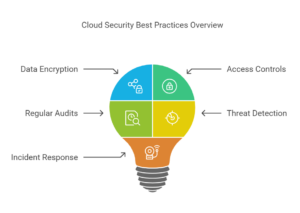
The Hard Truth: Default Configurations Aren't Security
Cloud teams can spin up new resources in minutes. Securing them thoughtfully takes longer, but most organizations aren't taking the time.
In recent audits, more than 80% of organizations discovered critical security gaps in their cloud infrastructure that had been sitting undetected for months. The culprit is almost always the same: default configurations that prioritize convenience over protection.
Traditional data center security models weren't built for environments where the perimeter moves constantly. What worked on-premises creates blind spots in the cloud.
Practices That Actually Protect Your Environment
Encryption That Follows Your Data
The real challenge isn't encrypting data at rest. It's protecting data as it moves between services, environments, and clouds. Static encryption policies break down in dynamic cloud architectures.
Leading organizations implement context-aware encryption: protection that automatically adjusts based on data sensitivity and usage context. Patient records, financial data, and internal telemetry don't all need the same treatment. Calibrating that distinction is what separates security theater from genuine protection.
For a deeper look, explore Cloud Data Encryption strategies.
Access Control That Adapts to Behavior
Modern access control is no longer about static permissions and passwords. It's about understanding who is accessing resources, from where, when, and why, and responding in real time when something looks off.
When a legitimate user accesses a critical system from an unusual location or at an unexpected hour, verification should automatically escalate. This is what adaptive authentication looks like in practice: security that's invisible to normal work but precise when it matters.
Segmentation That Responds to Threats in Real Time
Network boundaries don't work the same way in the cloud. Perimeter-based thinking leaves you exposed when threats originate inside your environment.
Dynamic segmentation solves this by isolating workloads based on behavior, not just configuration. When unusual activity is detected, affected workloads are contained automatically, limiting the blast radius before your team even gets the alert.
One technology company contained a breach attempt to less than 0.1% of their infrastructure using this approach. That's not luck. That's architecture.
Security That Doesn't Break Your Budget
Comprehensive cloud security doesn't require buying every tool on the market. It requires knowing where your native cloud capabilities end and where targeted solutions fill the gaps.
The most cost-effective programs are built on centralized logging with focused analytics, tracking the metrics that directly affect your security posture rather than collecting data for its own sake. Early signal detection, not reactive remediation, is where the ROI lives.
How Aviatrix Helps You Meet PCI DSS Requirements
The table below maps Aviatrix capabilities to PCI DSS testing procedures directly.
PCI DSS Testing Procedure | How Aviatrix Helps |
1.2.1.a — Examine firewall and router configuration standards to verify that they identify inbound and outbound traffic necessary for the cardholder data environment. | Firewall rules are managed from a centralized console, giving you a single pane of glass across all VPCs. Verification can be automated using Aviatrix APIs or one of our SDKs. Tag-based policies use human-readable aliases for your CIDR ranges, making rules easier to audit and explain to your compliance team. Aviatrix also includes a full audit log with a graphical dashboard for deep visibility into all rule changes and access events. |
What's Coming: AI-Driven Security at Scale
AI isn't a future state for cloud security. It's already in production for the organizations ahead of the curve.
The shift it enables is fundamental: from reactive incident response to predictive threat detection. Systems trained on historical attack patterns identify anomalies before they escalate, reducing the alert volume that burns out security teams.
Machine learning also optimizes security configurations over time, reducing false positives while improving detection accuracy. The organizations getting this right aren't replacing human judgment. They're amplifying it.
Moving Forward
The organizations that manage cloud security effectively aren't chasing every new capability. They're building adaptable foundations: strong fundamentals, smart automation, and architectures that can evolve as their environments grow.
The path to resilient cloud security is less about adding tools and more about connecting the ones you have into a coherent, responsive system.
Learn how Cloud Security Automation can streamline your security operations →

