
 ChatGPT
 Claude
 Google AI
 Grok
What a room full of CISOs in Dallas got right about this week's outages, and why the metrics running most security budgets are measuring the wrong thing.
The Anomaly Wasn't the Outage
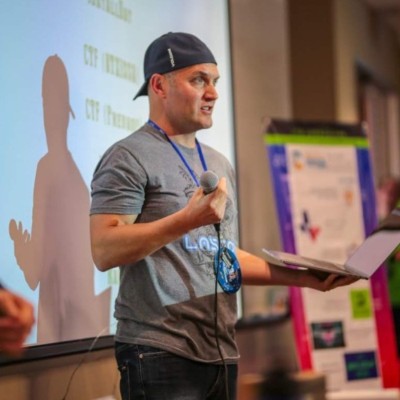
I spent Tuesday night in Dallas at a SINET dinner, one of the CISO gatherings Robert Rodriguez has been convening for years. Thirty or so security leaders, Chatham House Rule, and the conversation went where you'd expect it to go: the NSA had just sent most of Fort Meade home because NSANet, its classified internal network, was down.
I'd put a theory on the table earlier in the evening. The wave of outages we'd been living through for a week, the FAA ground stop, Chase, Microsoft, now the NSA, looked to me like the first visible cost of a patch cadence that AI-driven vulnerability discovery has forced on systems that were never built for it. By Wednesday, officials were telling Congress the same thing. Not an attack. Rushed patches for AI-discovered flaws, and in NSANet's case, reportedly a PHP patch that didn't go as planned.
But the observation that stuck with me came from a few people at the table who had spent part of their careers inside NSA or the Secret Service. To them, the anomaly wasn't that NSA had a bad patch. Agencies like that are under constant pressure and things break. The anomaly was that we heard about it. These are organizations whose entire posture is to never disclose an internal failure, and this one spilled out because you cannot hide an empty parking lot. An availability failure is the one kind of security failure that can't be kept quiet.
I think that's the most important thing anyone said all night, and I want to explain why.
You Cannot Patch Fast Enough, and Now We Have Proof
Two weeks before the NSA went dark, Asaf Ezra and Steph Zhang at Andreessen Horowitz published Defense in Depth, Rebuilt for Machine Speed. Their diagnosis was right, and they said it better than I have: "patching was never really the control. It was the hope." They also called this week before it happened. Push patches hundreds of times a day, they wrote, and "you just swap attacks for self-inflicted downtime." Alan Shimel made the same case on Security Boulevard this morning under the title We Can't Patch Our Way Out of This. When the VCs and the trade press and a room of practitioners in Dallas all arrive at the same sentence in the same week, something has shifted.
Here is the arithmetic, and it is not close. Exploitation now lands a median of three days after a CVE is published, and nearly 29% of last year's exploited vulnerabilities were hit on or before disclosure day. Full remediation takes a median of 43 days. For a network appliance, more than a year. And the patches themselves are suspect: when 1Password graded 6,080 AI-generated patches, only 26% fully fixed the bug without breaking something else.
So the physics of this changed. For twenty years, finding and weaponizing a vulnerability was expensive and slow, and that gap was the defender's margin. Mythos-class models and their open-source cousins closed it. What's left is a trade nobody explicitly agreed to: faster patching buys down exposure to known flaws, and pays for it with more self-inflicted outages on always-on legacy systems that have no live-patch path and no rehearsed rollback. The NSA didn't lose that trade through incompetence. The trade is just bad, and it gets worse the older the system.
The Metrics Running Your Budget Measure the Wrong Clock
Here is where I part ways with most of the commentary, a16z included.
Ask a CISO how they're measured and you'll hear the same four things: CVE count, time to patch, mean time to detect, mean time to remediate. Those four numbers drive architecture decisions and they drive budgets. And every one of them is a measure of how fast you respond after something has already gone wrong. In a world where the exploit arrives before the disclosure and the fix takes down production, getting faster at responding is still losing. You're just losing with a better lap time.
Even a16z, having diagnosed the disease, reaches for the old clock. They tell buyers to measure "time from the first malicious event to containment." I understand why. It sounds like a containment metric. But it has a dependency buried in it: the clock starts when detection succeeds. CrowdStrike's fastest observed breakout last year was 27 seconds, and 82% of detections were malware-free, meaning nothing to signature. The adversaries you actually worry about defeat detection first. A control that waits for an alert inherits every weakness of the alert.
What Containment Actually Means
The word containment gets used two ways, and the difference is the whole argument.
The common usage is what the incident response team does after the alarm goes off. Isolate the host, kill the session, rotate the credentials. That's reactive containment, and it's valuable, but it only starts when detection has already worked.
What I mean by a containment system is different. It's structural. It governs what a compromised workload, identity, or segment can reach, and it does that before the breach, during the breach, and after the breach, whether or not anyone ever notices the breach happened. A bulkhead, for lack of a better analogy, rather than a crew running toward the leak.
a16z actually describes this working, though they don't call it that. A frontier-model-driven intruder got as far as the boundary between a Mexican water utility's office network and its control systems, and stopped there. Nobody detected it in time. The wall was already up. That is the one control whose effectiveness does not depend on being faster than the attacker, and it's the floor every AI security strategy now has to stand on.
It also changes the patch problem that broke the NSA. A critical CVE on a system behind strong containment is a scheduled change you can test, stage, and roll back on your own terms. The same CVE with unrestricted reach is an emergency, and emergencies are what take networks down.
Blast Radius Economics
If containment is the control, boards need numbers that measure it. Keep the four you have. Add two, from the framework we've published as Blast Radius Economics.
Reachable Value at Risk. For each system, what can it reach, and what is that worth in dollars? This is the number that tells you where an unpatched flaw or a failed rollback actually hurts, and you can compute it before anything goes wrong. It's also, in my experience, the first security metric a CFO has ever asked a follow-up question about.
Durable Risk Reduction. Rank security projects by how much reachable value they permanently take off the table. A control that only works when detection succeeds scores low. One that holds regardless scores high. I'll be honest that this one is harder to measure cleanly than I'd like, and we're still arguing internally about the right denominator. But even a rough ranking beats the current practice, which is ranking projects by whichever vendor got the last meeting.
The One-Question Test
Stop treating this week as an anomaly. It's the first data point in a trend that runs one direction, and the people in that Dallas room who've seen the inside of these agencies didn't think it was a fluke either.
Map Reachable Value at Risk for the systems that matter. Put structural containment in front of the ones you can't patch quickly or safely. Then let the patch program run as fast as the threat demands, because a failed window behind containment is an incident, and a failed window without it is a congressional briefing.
a16z is right that the companies worth funding are the ones that make patching less urgent. I'd offer one test for which of them are worth buying. Can they shrink what a compromise can reach without first having to detect it? If the answer is no, you've bought a faster response to a race the math already says you lose.
Learn what a compromised workload could reach in your environment through a free Containment Assessment.
References
1Password, “How information quality impacts LLMs’ ability to patch complex, novel vulnerabilities,” August 6, 2026, https://1password.com/blog/why-ai-generated-patches-still-require-human-review
Andreessen Horowitz, “Defense in Depth, Rebuilt for Machine Speed,” November 6, 2026, https://a16z.com/defense-in-depth-rebuilt-for-machine-speed/
CrowdStrike, “CrowdStrike 2026 Global Threat Report: The Evasive Adversary Wields AI,” February 24, 2026, https://www.crowdstrike.com/en-us/blog/crowdstrike-2026-global-threat-report-findings/
Kraven Security, “How to Fix Vulnerability Management When AI Finds Bugs Faster Than You Can Patch,” November 16, 2026, https://kravensecurity.com/ai-vulnerability-management/
Ready to see Aviatrix in action?
Get a personalized live demo walkthrough or explore our latest deep-dive cloud threat research intelligence.
Gartner Strategic Roadmap for Zero Trust Security Programs 2025 Report
Download and gain actionable insights to advance your cloud security strategy.