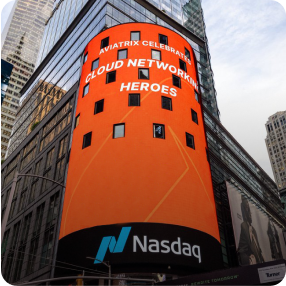



Aviatrix wants to elevate the work of cloud networking heroes who labor to keep networks secure, effective, and performant. We’re proud to highlight people who have taught themselves the necessary skills, designed and managed successful networks, and have the expertise to share.
Our next hero spotlight is on Ravi Teja Pathipati, Cloud Architect. See our previous hero spotlights here.
Breaking Down Challenging Ideas
At his company, Ravi serves on a team that implements the Aviatrix cloud network security solution to set up new hubs or spokes with application deployment. He manages all Aviatrix operations and implementation, performs regular software or image upgrades, troubleshoots connectivity, handles new spoke and hub onboarding, and oversees architecture designs.
Ravi’s favorite part of his role is being able to help people navigate complex topics and solve problems in a way that’s meaningful to them. “Whether it’s offering insights into a technical subject, brainstorming new ideas, or helping someone clarify their goals, it’s rewarding to see the impact that a conversation or solution can have,” he said. “I really value being able to break down challenging ideas and make them easier to understand, especially in areas like networking or cloud technologies, which can sometimes feel overwhelming.”
To handle the challenge of his role, Ravi has become comfortable with the idea of continuous iteration. “Instead of aiming for perfection from the start, I focus on incremental progress,” he explained. “This is especially important in tech, where things change so fast and trying to get everything ‘right’ from the beginning can lead to paralysis or missed opportunities. A mindset of evolving and adjusting as you go has been key to overcoming some of the challenges that come with constantly shifting technology landscapes.”
A Shifting Landscape of Security Discussions
Ravi described how moving to the cloud has “definitely shifted the landscape of security discussions.”
“When we were primarily working in on-prem environments, security was often more about physical access control, perimeter defenses (like firewalls), and managing servers on-site,” he said. “There was still a strong focus on securing networks and systems, but it was often a bit more contained. You could control your hardware, your physical environment, and know exactly where your data was stored.”
The cloud has changed the dynamic significantly. “While the cloud offers massive flexibility and scalability, it also introduces a much broader attack surface,” Ravi said. “Data is no longer stored in a single, well-defined place; it could be spread across multiple data centers, regions, or even different cloud providers. This requires a shift toward ‘shared responsibility,’ where the cloud provider takes care of certain aspects of security (like physical data center security), but the customer is still responsible for securing data, applications, and access controls.”
Ravi described several reasons cloud environments have increased the need for security planning:
Data Sovereignty & Compliance: “With cloud services distributed across the globe, organizations must carefully manage where their data is stored to comply with local data privacy laws and regulations. This requires more careful planning and monitoring.”
Scalability & Access: “Cloud environments are often more open and accessible, which, while offering benefits, can make systems more vulnerable. Securing access and ensuring proper identity management is a bigger challenge with cloud-based systems, especially as users, devices, and apps become more distributed.”
Shared Responsibility Model: “Cloud providers typically offer a high level of security on their end, but it’s up to the user to ensure proper configuration, encryption, access management, and monitoring. This means security is a continuous, evolving responsibility.”
Tackling Cost Management
Ravi offered some advice for one of the challenges networking professionals face: managing cloud costs. “Cloud can offer incredible flexibility and scalability, but it can also come with a bit of ‘sticker shock’ if you’re not careful about cost management,” he said. He gave a few recommendations:
Understand the Pricing Model of Your Cloud Provider: “Cloud providers have complex pricing structures, and it’s crucial to get a solid grasp on how they charge for networking services. For example, data transfer, inter-region communication, and egress (data leaving the cloud) can incur significant costs. Each provider (AWS, Azure, Google Cloud, etc.) has its own pricing model, and understanding these nuances will help you optimize your usage.”
Optimize Data Transfer and Bandwidth Usage: “Minimize unnecessary data transfer between regions or between on-prem and the cloud. Implementing edge computing or content delivery networks (CDNs) can help reduce the volume of data that needs to travel across the network, thereby lowering costs. You can also use things like compression and deduplication techniques to reduce the amount of data transferred.”
Use Virtual Network Functions (VNFs) and SD-WAN: “Consider utilizing software-defined wide area networking (SD-WAN) or other virtualized network services, which can help consolidate and simplify your network infrastructure. SD-WAN, in particular, can dynamically optimize data routing based on real-time conditions, helping to keep costs in check while also improving performance.”
Leverage Autoscaling and Reserved Instances: “Many cloud providers offer autoscaling features that allow you to scale up or down based on actual demand. This helps you avoid overprovisioning and ensures you’re only paying for what you actually need. Additionally, reserving network resources or purchasing committed use plans can offer significant savings over pay-as-you-go options.”
Implement Network Visibility and Monitoring: “Using tools for network monitoring and visibility will help you track where resources are being used and identify areas where cost overruns are happening. With cloud, being proactive in monitoring and setting up alerts for unusual network usage can help prevent unexpected charges.”
The Network is the Cloud: The Boundaries are Blurring
To Ravi, the concept of “the network is the cloud” speaks to the idea that “the traditional boundaries between networking infrastructure and cloud services are blurring, which means that cloud resources, such as storage, computing power, and applications, are increasingly being delivered over the network itself, and the network has to be flexible, resilient, and capable of supporting these services at scale.”
Outside of Work
Outside of work, Ravi loves playing games with his kids and his friends. He plays badminton every day and enjoys watching cricket and football.
Curious about other cloud networking heroes like Ravi?
We’ll keep highlighting networking professionals on this blog.
Learn more about the Cloud Networking Heroes program and apply on The Cloud Network Community.
Ready to see Aviatrix in action?
Get a personalized live demo walkthrough or explore our latest deep-dive cloud threat research intelligence.
Gartner Strategic Roadmap for Zero Trust Security Programs 2025 Report
Download and gain actionable insights to advance your cloud security strategy.